Getting rid of geckos: why sealing gaps matters more than spraying
A gecko is a small reptile, not an insect, and it feeds on insects. At night it waits next to the balcony or window light for the moths and cockroaches that come to it, and by day it hides in a crack in the wall or behind the AC pipes. If you have one at home, there is food for it, and there is a gap it came in through.
Gecko control starts there. Texas A&M AgriLife guidance says no pesticide is registered for geckos, and that the answer is to close off the ways in. Replace worn rubber seals on doors and windows, and fill the cracks around pipes and electrical cables with silicone or foam. If you find white oval eggs, often in pairs inside a crack, a gecko is laying nearby and that spot needs sealing.
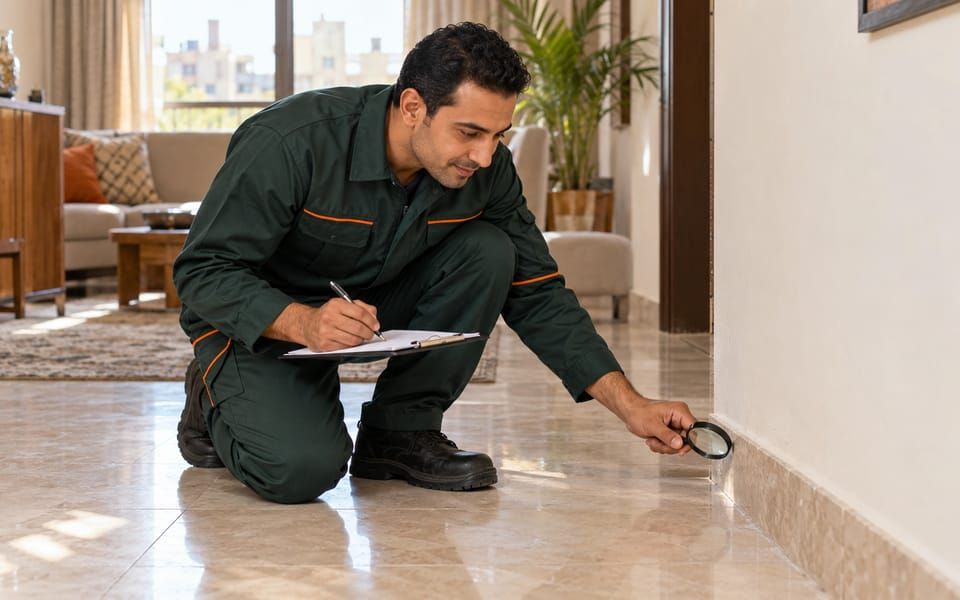
The technician shows you which gaps the geckos are using and which insects are bringing them, and tells you where to start.
Silverfish in the bathroom and in books: the problem is damp
Silverfish like warm, damp places such as the bathroom, the cupboard under the sink and the laundry room. They eat anything with starch or glue in it, from book pages and bindings to wallpaper and starched clothes, along with flour and pasta. That’s why they turn up on bookshelves, in the storage loft and in old cardboard boxes.
Spraying alone won’t solve it, because as long as the humidity stays high, more will come. Start by fixing any leak under the sink or in the air shaft, run the bathroom extractor fan, and seal the gaps around pipes. Move stored books and papers every so often, and keep dry food in airtight jars. If the infestation is heavy, any spraying is aimed at cracks and hiding places, not into the air of the bathroom.
Other pests that show up in Egyptian homes
Plenty of pests show up in homes without the owner knowing what they are called. These are the most common:
- Earwigs: they hide by day in dark, damp spots, such as under plant pots, and come indoors when it gets very dry, hot or cold outside. They don’t harm people, and sweeping them up and sealing cracks works better than spraying indoors.
- Spiders: most can’t harm people, and they feed on other insects. A vacuum cleaner removes the web and the spider together, and less clutter leaves them fewer places to settle.
- Crickets: outdoor lighting is the main reason they gather. Yellow bulbs attract them less, and sealing the gaps near the lights keeps them out.
- Flour and rice weevils: they usually arrive in a pack that was infested from the start. The fix is throwing out what is infested, cleaning the shelf, and storing food in jars.
- Clothes moths: their larvae eat wool. Washing in hot water or dry cleaning kills the larvae, and storing woolens in sealed bags protects them until winter.
Bed bugs, cockroaches, rats and mice, ants, mosquitoes, ticks, fleas, woodworm and termites each have their own page explaining the treatment, because each one hides in different places and has a different life cycle.
When should you call a pest control company?
If the pest keeps coming back after you have sealed the gap or fixed the leak, if you find it in more than one room, or if you have no idea what it is, it’s time for a diagnosis. At this point many people ask for a whole-home fumigation, but one photo on WhatsApp can save you spraying the entire house for the wrong insect. If you run a restaurant or a food store, report it as soon as you see a sign in the stock, because one infested pack can carry the insect to the rest of the shelves.
Send the photo on WhatsApp to +201007892200, or find the other ways to reach us on our contact page.