+201007892200WhatsAppع

Insect and rodent control services

All services

Not sure what the pest is? Send a photo or a short description on WhatsApp and we will tell you what it is and how to treat it.

Elalmanya BiologyHomes and businessesSame day, any governorate

Mosquito control that starts with the water they breed in

The mosquito that bites you at night most likely grew up in still water close by, in a plant saucer on the balcony, a bucket under the AC unit or a garden fountain that has stopped running. Spray the bedroom and leave the water, and a new batch comes out in about a week. So we start with the water, then we spray.

  • Water sources
  • Breeding sites
  • Villas and compounds
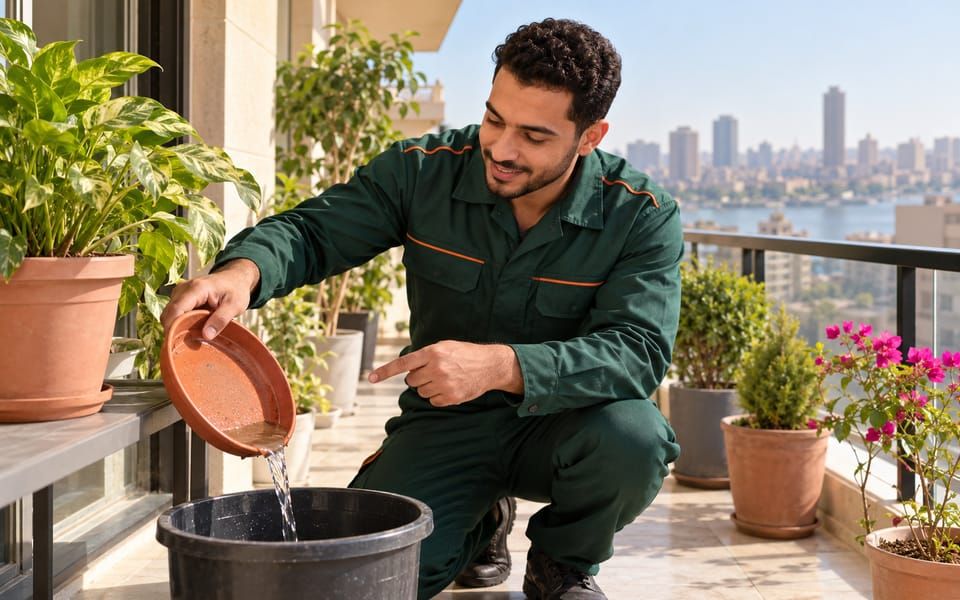
Illustrative photo of a technician, without a face mask, emptying standing water on a balcony

In short

Our mosquito control starts with a walk around every spot that holds still water on the balcony, roof and garden. Whatever can be emptied, we empty and clean. Tanks get covered, and large bodies of non-drinking water get a larvae treatment. Then we spray the dark, damp places where adult mosquitoes rest and leave you a weekly checklist.

  • Mosquito control specialists
  • We start where they breed
  • For villas, compounds and gardens
  • We find the source before treating
  • Cost explained before the visit
  • Safety instructions first
  • Follow-up when your case needs it
  • Homes, offices and restaurants

Signs

Where are the mosquitoes coming from? Signs they breed near you

Some mosquito species never travel more than a few streets in their lifetime, so heavy biting usually means the source is close: your home, your building or your garden. Start with the plant saucers and buckets on the balcony. Photograph any water with something moving in it and send it on WhatsApp, and we'll tell you if it's mosquito larvae.

  1. Bites at night with the windows closed

    Night-biting mosquitoes are active from sunset to dawn. If the bites keep coming with the windows shut, either a window screen has a hole or a balcony door is being left open, or the mosquitoes are breeding inside the apartment itself, in a plant pot, a vase or a bucket.

  2. Tiny worms wriggling in the water

    These are mosquito larvae. They live in the water and feed on what's in it, and you'll find them in plant saucers, AC drip buckets or open barrels. If you also see still shapes hanging just under the surface, those are probably pupae, and the flying mosquitoes come out of them.

  3. Water left standing for 5 days or more

    Any water left unchanged for 5 days or more can become a breeding site, like a saucer under a plant, an upturned bucket lid, an old tire on the roof or a clogged gutter. Some species need no more than a spoonful of water to complete their cycle.

  4. Mosquitoes resting in dark spots

    During the day, mosquitoes rest in dark, damp places, under the sink, in the bathroom, inside wardrobes, under sofas and in the laundry room. If you move something in one of these spots during the day and mosquitoes fly out, that spot needs spraying.

  5. The garden fills with mosquitoes at sunset

    Outdoors, mosquitoes hide in tall grass, shrubs and hedges, under garden chairs and in the garage, because these places are cool, dark and damp. If an evening in the garden turns into nonstop bites as soon as the sun sets, there's a water source nearby and a resting spot that needs treatment.

  6. Found one of these signs? Take a photo and send it to us, and we will tell you whether it is mosquitoes or something else before any visit.

    Send the photo

Where do mosquitoes breed in an Egyptian home?

Any water that sits for a few days can turn into a breeding site, and mosquitoes lay eggs in clean water just as they do in stagnant water. The source doesn’t have to be a pond or a sewer, and it’s usually closer than you think. These are the places we start with:

  • The balcony: plant saucers, the bucket that collects AC drips, and any lid or toy left lying in a corner.
  • Inside the apartment: vases, plants that grow in water, and the cat’s water bowl if it goes days without being changed.
  • The roof: the water tank if its lid isn’t tight, gutters clogged with dust and leaves, and old tires and barrels.
  • The garden: the fountain when its pump stops, a swimming pool left without maintenance, rain drains, and the septic tank if it has a crack or an open vent pipe.

If you find larvae in any of these, empty it and scrub its inside wall, then decide whether you need it at all. Anything you don’t need, turn upside down or throw away.

From egg to biting mosquito in about a week

A mosquito lays her eggs either on the surface of the water, in a cluster stuck together, or on the inside wall of a container a little above the waterline. The eggs hatch into larvae that wriggle in the water and feed on what’s in it. Then they turn into pupae, which hang just below the surface and don’t eat, and the flying mosquito comes out of the pupa. The whole journey takes 7 to 10 days.

So every week the source stays, it sends out a new batch. And if you empty a bucket on the balcony today and fill it again tomorrow without scrubbing it, the eggs stuck to its wall can hatch all over again.

Only the female bites. The male doesn’t, and the female needs blood to make her eggs. So the bite you wake up with is part of the egg cycle itself, and those eggs are on their way to the nearest still water.

Mosquito repellent or mosquito spraying?

They do different jobs. A repellent you put on your skin protects you while you sit in the garden or sleep, but it doesn’t lower the number of mosquitoes around you. Mosquito spraying cuts down the adults resting in trees and dark corners, and treating the water stops the next batch from coming out at all.

Rely on repellent alone and you’ll be protecting yourself every night from mosquitoes that are born every week. Spray without closing off the water and you’ll notice a difference for a few days, then the bites come back. The order that works is the water first, then spraying where they rest, with repellent and a bed net until the numbers drop.

When should you call a mosquito control company?

If you’ve emptied and scrubbed every container on the balcony and the roof for 2 weeks in a row and the biting hasn’t changed, there’s a source you can’t see. It could be a drain, a septic tank, a gutter or water at the neighbors’ place. And if you have water that can’t be emptied, like a fountain, a pond or a swimming pool, or a garden with dense trees, the job needs products and equipment suited to the site and someone who knows where to look.

We come the same day to any of Egypt’s 27 governorates. Send photos of your balcony or garden on WhatsApp to +201007892200 so the technician arrives knowing where to start, or find every other way to reach us on the contact page.

Why it comes back

Why do mosquitoes come back a week after spraying?

Spraying a room kills the mosquitoes flying in it at that moment, but never reaches the eggs and larvae in the water. One mosquito can lay up to 300 eggs stuck together on the water, and an egg becomes an adult in 7 to 10 days. While the source remains, a new batch comes out about every week.

300eggs at most in one batch from a single mosquito

Standing water, even a small amount, can become a breeding site. Finding the water source and dealing with it is an important step before treating the mosquitoes that fly.

Source: CDC
  1. Spraying doesn't reach the water

    The US Centers for Disease Control and Prevention (CDC) says spraying a home on its own won't keep it free of mosquitoes. Larvae and pupae live in water, so the source itself needs treating. It gets emptied or covered, or the water that can't be emptied gets a larvae treatment.

  2. Eggs survive months without water

    One type of mosquito glues its eggs to the inside wall of a container, just above the waterline. Those eggs can survive dry for up to 8 months and hatch as soon as irrigation water or rain covers them. So when you empty a saucer or a bucket, scrub the inside well before you fill it again.

  3. A spoonful of water is enough

    You don't need a pond. Some species complete their cycle in a spoonful of water, in a bottle cap, a saucer under a plant or AC drips pooling in a corner of the balcony. One forgotten spot like this is enough to bring the bites back a week after any spraying.

Treatment

How our mosquito spraying works, step by step

The visit has 5 steps, and most of it is spent looking for water, not spraying. We find the sources first, deal with each one in the way that suits it, then spray where adult mosquitoes rest. Before the technician leaves, they show you every source they found, so you can check those spots yourself afterward.

  1. Questions and photos before the visit

    We ask when and where the biting gets worse, whether you have a garden, a swimming pool, a fountain or a rooftop tank, and whether there are children, a pregnancy, pets or fish at home. A photo of the balcony or of water you're unsure about saves a lot of time on the visit.

  2. A walk around every water source

    The technician checks balconies, plant saucers, AC drips and vases, then the roof with its tank, gutter, old tires and anything stored up there. At a villa they carry on to the garden, the fountain, the swimming pool, the septic tank and the rain drains.

  3. Dealing with the source itself

    Whatever can be emptied gets emptied and scrubbed inside. A tank gets a tight lid, and anything without a lid gets covered with fine mesh, smaller than a mosquito. Large bodies of non-drinking water, such as a fountain, a pond or a septic tank, get a larvae treatment suited to the place.

  4. Targeted spraying where mosquitoes rest

    After the sources, we spray where adult mosquitoes sit, in shrubs, hedges, tall grass and under garden chairs, and indoors in dark, damp corners. In large gardens we may use a fine mist spray for flying mosquitoes (what many people call fogging), depending on the size of the area.

  5. A weekly checklist for you

    The technician tells you which sources you need to check once a week, such as emptying and scrubbing plant saucers, changing vase water and looking at the AC bucket. If the case needs a follow-up visit, its date is set after the inspection.

Ready for the first step? Tell us what you saw.

Safety

Is mosquito spraying harmful to children and pregnant women?

It depends on the product, how it's used and where it's sprayed, so before the visit we ask about children, pregnancy, allergies, pets and fish tanks. Much of mosquito control is work on the water, and spraying stays in specific spots. The technician tells you how far to keep away and when to return, based on the product.

  • Children and pregnancy

    Tell us on the first call. When you can go back into the area depends on the product. For a small child, a net over the bed and the stroller is the easiest protection, and ask a doctor or pharmacist before putting any repellent on their skin.

  • Pets and fish tanks

    Take cats, dogs and bird cages out of the sprayed area until it dries. Cover the fish tank and switch off its pump, and tell us if you have a garden pond with fish, because some products affect fish even in small amounts.

  • Drinking water and food

    Nothing goes into a drinking water tank. It only gets a lid or fine mesh. Cover any food and utensils on the balcony or in the garden before spraying, and wash anything that was left out before you use it.

  • If someone feels unwell

    If someone swallows a product by mistake, or feels dizzy or short of breath after spraying, call an ambulance on 123 right away. You have the right to know the product's name and details before spraying, so you have them ready if you need a doctor.

Who it is for

Mosquito control for villas, compounds and resorts

The more water and plants a place has, the more mosquito sources it has. An apartment usually has 2 or 3 sources on the balcony, while a villa or compound has irrigation, gardens, fountains and swimming pools. The difference lies in how big the survey of sources is, and in who will check the water every week after the visit.

Homes and apartments

In an apartment we start with the balconies, the bathroom and the kitchen, then the roof if you keep anything up there. Most sources here are small things like a plant saucer, a vase or an AC bucket. Send us a photo of the balcony and tell us how many rooms have bites, and we'll tell you what the visit will cover.

Send details of your home

Businesses and offices

In compounds and resort villages on the North Coast and the Red Sea, and in hotels and resorts, the work covers fountains, artificial lakes and swimming pools left without maintenance after the season, along with rain drains, septic tanks and irrigation networks. We agree a water-check schedule with the management, plus simple instructions that help gardeners and maintenance staff spot larvae early.

Ask for a business quote

Price

What sets the price of mosquito control?

No single price fits every case. An apartment with one infested room is not the same as a whole apartment, and a home is not the same as a business. The cost depends on these four factors, and we explain it in detail before you confirm the booking, with no surprise charges after the visit.

  1. Size and type of placeA 90-square-meter apartment is not the same job as a villa with a garden, and a restaurant is not the same as a warehouse.
  2. Type of pestEach pest needs its own product and method. Gel bait for cockroaches, bait stations for rats and mice, and wood injection for woodworm.
  3. How far it has spreadA first sighting a week ago is different from an infestation that has been there for months. That is why we ask for photos and signs.
  4. How many visits the case needsSome cases need a follow-up or an extra visit. We decide that after checking which insects or rodents are involved and how far they have spread.

Ask for the quote to show:

  • Inspection and finding the source
  • The products used and their details
  • Number of visits and the follow-up needed
  • Terms and length of any guarantee, if there is one
  • How we record what was done on the visit

Coverage

Mosquito control in every governorate, same day

We cover all 27 governorates of Egypt with same-day visits. Send your area and the problem on WhatsApp or call us, and we will set a visit time for your home or business. The groups below show the main cities and districts in each region we reach.

  • Greater CairoCairo, Giza and Qalyubia, including Nasr City, New Cairo (Fifth Settlement), Rehab City, El Shorouk, Madinaty, Maadi, Heliopolis, Helwan, 6th of October, Sheikh Zayed and Mohandessin
  • Alexandria and the CoastAlexandria, Beheira, Matrouh and the North Coast
  • The DeltaGharbia, Monufia, Dakahlia, Sharqia, Kafr El Sheikh and Damietta
  • Canal Cities and SinaiPort Said, Ismailia, Suez, North Sinai and South Sinai
  • Upper EgyptFaiyum, Beni Suef, Minya, Asyut, Sohag, Qena, Luxor and Aswan
  • Red Sea and New ValleyRed Sea and New Valley
Send your area and book today

Questions

Common questions about mosquitoes

These are the questions people in Egypt ask most about mosquitoes, with answers from our daily work. If yours is not here, type it in the box below. It lands in our WhatsApp, and one of the team replies about your exact situation.

How do I get rid of mosquitoes at home?

Close off the water they breed in. Empty and scrub plant saucers and buckets once a week, cover the tank and fix the window screens. Repellents and spraying cut down the mosquitoes already there, but until the source is closed off, a new batch comes out about a week later.

How do mosquitoes get into the house?

Through open windows and doors, through any hole in a screen, and through pipe openings or a septic tank that isn't covered with fine mesh. Sometimes they don't come in at all, because they bred inside the apartment, in a vase, a plant or a bucket under the AC. That's why we search inside and outside on the same visit.

Do vinegar or incense keep mosquitoes away?

Vinegar and incense don't treat the place where mosquitoes breed. They breed in water, and no smell in the room reaches the eggs and larvae there, so the next batch comes out on schedule. To protect yourself while you sit, use a skin repellent. If you burn incense, keep it away from curtains and children.

What can I put on my skin so mosquitoes don't bite me?

Use a registered skin repellent from a trusted place such as a pharmacy, and follow the label exactly. If you wear sunscreen, put it on first and the repellent after it. Don't put repellent on a child's hands or near their eyes and mouth, and ask a doctor before using it on young children.

How do I get mosquitoes out of the bedroom before I sleep?

Close the window and balcony door before sunset, because mosquitoes are active from sunset to dawn, and turn on the AC if you have one. Look for mosquitoes resting in dark corners, inside the wardrobe and under the bed. Move any plant or vase with water out of the room, and sleep under a net until the source is treated.

Can mosquito bites spread disease?

Some mosquito species can spread diseases such as dengue, malaria and West Nile virus in different parts of the world, according to the CDC. The bite itself usually leaves a red, itchy bump. If the itch turns into redness and warmth around the bite, or you get a fever after many bites or after travel, see a doctor.

How long does mosquito spraying last?

There's no fixed number. Spraying reduces the adult mosquitoes that rest in the treated spots, and how long it lasts depends on the product, the sun, irrigation and rain. The sources matter more. Once the water is closed off, no new generation comes out of it. Leave it, and a new batch appears about every week.

Do we have to leave the house during mosquito spraying?

It depends on where we spray and on the product. Spraying the garden and the hedges means closing the windows and doors that face them and keeping children and pets away until the spray dries. Spraying indoors means staying out of the room until it's dry and aired, and the technician tells you how long before starting.

Not sure where to start? Tell us the problem and we'll plan the next step with you.

+201007892200
Browsing on a computer?
Scan the code and call us from your phone.