+201007892200WhatsAppع

Insect and rodent control services

All services

Not sure what the pest is? Send a photo or a short description on WhatsApp and we will tell you what it is and how to treat it.

Elalmanya BiologyHomes and businessesSame day, any governorate

Ant control: we follow the trail back to the colony

The ants on your countertop are a small part of the colony. The rest are hidden in the wall, under the tiles or outside the window, along with the queen that lays the eggs. So we follow the trail first, then put down bait the ants carry inside themselves.

  • Trail tracking
  • Colony bait
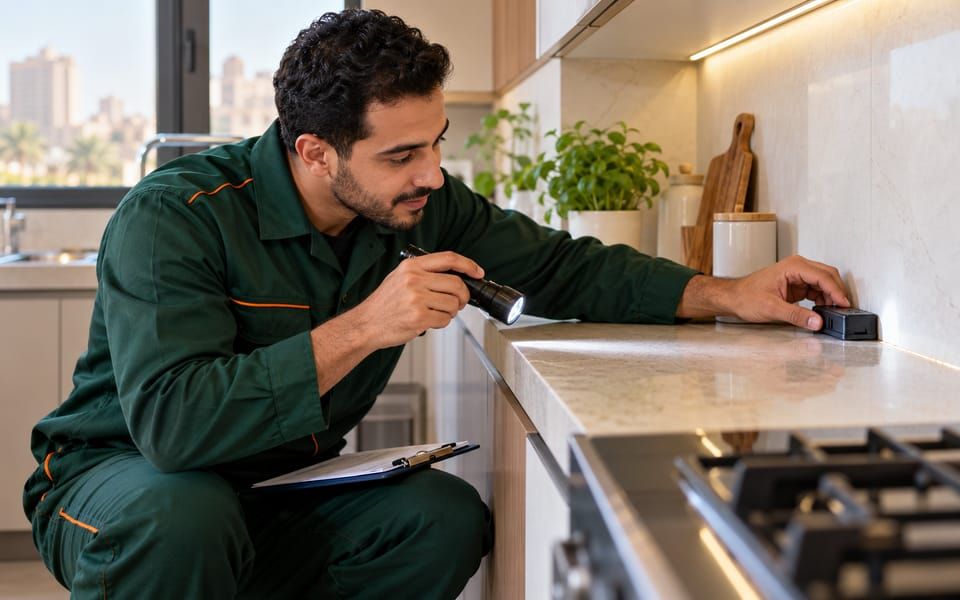
Illustrative photo of a technician without a face mask placing ant bait in a kitchen

In short

Ant control starts by following the trail to its entry point, such as a doorstep, a window frame or a tile crack. Then slow-acting bait goes on the route, so the workers carry it to the nest and feed it to the queen and the young. A quick spray kills only the ants it touches, and the colony sends more.

  • Ant control specialists
  • We follow the trail back to the colony
  • Bait that reaches the colony itself
  • We find the source before treating
  • Cost explained before the visit
  • Safety instructions first
  • Follow-up when your case needs it
  • Homes, offices and restaurants

Signs

Signs of ants in the kitchen and home

One or two ants on the countertop aren't a big problem. The problem is a steady trail going back and forth along the same line every day, because it means a nearby nest has found food in your home and keeps sending workers. Watch the trail for a while, photograph it, and see where it starts and where it ends.

  1. A trail along the same line

    Ants leave an invisible scent trail, and the workers follow it between the food and the nest. That is why you see them along the edge of the countertop, beside the skirting board or along a tile joint, and every time you wipe them away they return to the same path.

  2. Ants on sugar or on grease

    Some ants go for sugar, honey and spilled juice, while others look for fat and protein, such as oil around the cooker or the cat's food. The kind of food the ants gather on tells us which bait they will eat.

  3. Ants by the window and balcony

    Window frames, the balcony doorstep and the air shaft are some of the most common ways in for ants, especially where there is a crack between the marble and the wall. If you keep potted plants on the balcony, the nest may be inside a pot.

  4. Fine soil beside cracks in the tiles

    A small pile of soil or fine sand next to a crack in the tiles or under the skirting board may come from ants digging a nest under the floor. Wipe it up and keep an eye on the spot. If it comes back in the same place, the nest is underneath.

  5. Winged ants coming out of the wall

    If you see flying ants coming out of a crack in the wall or out of a wooden door, photograph them before you spray anything. They may be ordinary ants flying off to start a new colony, or they may be termites, and the treatment is completely different.

  6. Found one of these signs? Take a photo and send it to us, and we will tell you whether it is ants or something else before any visit.

    Send the photo

Where do the ants in your kitchen come from?

The ants walking across your countertop don’t live there. They come from a nest that may be inside the wall, behind a cupboard, under the tiles, or behind the fridge and the washing machine, where it’s warm. Sometimes the nest is outside altogether: in the garden soil, in a flowerpot on the balcony or in a crack in the boundary wall, and the ants cover the whole distance every day to reach your sugar.

The first ant to find food heads back to the nest and leaves a scent trail on the floor as it goes. The other workers follow that trail, which is why ants march in a single line and come back to the same line after you wipe it. Soap and water really do remove the trail, but as long as the nest and the food are still there, the ants will lay down a new one.

So the first thing we do is follow the trail to its end. Where it disappears (a crack under the skirting board, the window frame, a pipe opening under the sink) is where the bait goes.

Sugar or grease? Ants choose their food

Some ant species want sweet food all year round. You’ll find them on the sugar tin, the honey jar and a cup of tea someone left out. Others prefer protein and fat and turn up around the cooker, in the cat’s bowl or on chicken scraps in the trash. Even a single species can change its taste over the year, so food it ate in winter it may ignore in summer.

This matters for treatment. A sweet bait in front of ants that are looking for fat may sit there untouched, and it looks as if the bait doesn’t work. You can test it yourself before the visit: put a drop of honey on a piece of card next to the trail, with a small piece of oily food beside it. After an hour, see which one the ants have gathered on, and tell the technician.

Ants or termites?

Termites are often called white ants, and the name confuses a lot of people. They are a completely different insect, and their treatment starts at the walls and foundations, not in the kitchen. Both sometimes swarm in the same season, so if you see winged insects coming out of a wall, compare them:

  • An ant has a thin, pinched waist. A termite’s body is broad, with no clear waist.
  • Ant antennae bend like an elbow. Termite antennae are straight.
  • An ant’s front wings are longer than its back wings. All four termite wings are the same size.

Termites also stay hidden. You’ll rarely see them walking in a trail across a countertop. They build thin mud tubes on walls and travel inside them, and they eat wood from the inside while the surface stays intact. If what you have looks like this, see our termite control page, or send us a photo and we’ll tell you which one it is.

When should you call an ant control company?

If you have put away the sugar and any uncovered food, wiped the trail, and a few days later the trail is back on the same line, the nest is close and needs bait in the right place. The same applies if ants show up in more than one room, come out of a crack in a wall or from under the tiles, or if you tried a spray and the ants appeared in new places instead of disappearing.

In restaurants and food stores, don’t wait until a customer sees them. Send us a photo of the trail and where it is on WhatsApp at +201007892200, and the visit can be the same day in any of Egypt’s 27 governorates.

Why it comes back

Why do ants come back after you spray them?

Spray kills the ants walking in front of you, a small part of the colony. The queen, the eggs and the young stay in the nest, out of the spray's reach, so the colony sends new workers. With some small species, a repellent spray splits the colony into several nests, and ants turn up in more places than before.

  1. You only see the workers

    The ants on the countertop are the ones out looking for food. Behind the trail there may be thousands more hidden in the nest, with one or more queens laying eggs. Killing the workers outside does nothing to the queen.

  2. Spraying splits some species

    Some very small ants, about 2 mm long and yellow or light reddish brown, such as Pharaoh ants, live in colonies with many queens. When they are hit with a repellent spray or powder indoors, part of the colony leaves and starts a new nest somewhere else, so instead of one nest you end up with several.

  3. Sprays and cleaners keep ants off the bait

    If you put down bait and spray next to it, or wipe the trail with a strong cleaner, the ants will stay away from the bait and won't carry it to the nest. Bait only works when the ants feed on it and keep coming back, so that enough of it reaches the queen.

Treatment

How to get rid of ants at home, step by step

The work starts with photos and questions before the visit, then the technician follows the trail to where the ants get in. The food they are after decides the type of bait, which goes on the trail itself. At the end we tell you what to do, and what not to do, in the days after the visit.

  1. Photos and questions before the visit

    We ask where the ants show up (kitchen, bathroom or balcony), how long they have been there, and whether they go for sugar or for oily food. If you can photograph one ant up close and the trail as well, that helps us tell ordinary ants from termites right from the start.

  2. Following the trail to the entry point

    The technician follows the trail along the countertop and skirting board until it disappears into a crack, under a doorstep or next to a pipe. They also check behind the fridge, under the sink, around the cooker and along the window frame, because the nest may be inside the wall or outside the apartment altogether.

  3. Choosing bait to match what the ants eat

    Ants that go for sugar take a sweet bait, while ants that go for oil and cooked food need a bait with protein or fat. Sometimes we put two types side by side and watch which one the ants eat, because a colony's diet changes over the year.

  4. Slow bait on the trail

    Bait goes on the ants' route and next to their entry points, in cracks or inside locked bait stations if there are children or pets at home. It acts slowly on purpose, so a worker has time to get back to the nest and feed the queen and the young before it dies.

  5. Treating entry points and aftercare

    Once we know where the ants get in, we treat that crack or doorstep and tell you which gaps need sealing with silicone or filler. We also explain that you may see more ants around the bait at first. That means they are eating it, so don't wipe it away or spray it.

Ready for the first step? Tell us what you saw.

Safety

Is ant bait safe in the kitchen and around children?

Bait goes in small amounts into cracks and along the ants' route, not on the countertop where you prepare food. Even so, safety depends on the product and where it goes. We ask about children and pets before the visit and show you exactly where we put the bait, so nobody touches it or moves it.

  • Babies and toddlers

    A crawling baby easily reaches the floor and the skirting board. Tell us on the first call and we'll put the bait in higher cracks or inside locked stations. If a child puts something in their mouth, call the ambulance on 123 and have the product name with you.

  • Food and dishes

    Clear uncovered food and dishes off the countertop before the visit, and keep sugar and honey in jars with tight lids. Bait never goes on surfaces where food is prepared, and the technician tells you what to wipe and when.

  • Cats and dogs

    Cat or dog food left on the floor all day draws the ants that like protein. Pick it up after meals, and tell us where your pets eat and sleep, so the bait stays away from those spots.

  • Ask about the product

    Ask the technician for the name of the active ingredient in the bait, and for its product information, before it goes down. You have every right to know, and it matters even more if someone at home has allergies or asthma.

Who it is for

Ant control for homes, restaurants and food stores

Ants get into any place with food and water, from a tenth-floor apartment to a restaurant kitchen or a sugar store. The method is the same: find the trail and bait the colony. What changes is the size of the inspection and the number of bait points, and in restaurants we also time our visits so the kitchen keeps running.

Homes and apartments

In an apartment, ants usually turn up in the kitchen, the bathroom or around the balcony sink. Don't wipe away the whole trail or spray it before the technician sees it, because the trail is what leads us to the nest. Photograph it and send it to us on WhatsApp, and tell us which floor you live on and whether you have a garden.

Send details of your home

Businesses and offices

In a restaurant, hotel or food store, a single ant trail on the sugar shelf spoils stock and shows in front of customers. The plan covers an inspection of the kitchen, storeroom and waste areas, bait in locked stations away from food, and visit times agreed with management so the work isn't disrupted.

Ask for a business quote

Price

What sets the price of ant control?

No single price fits every case. An apartment with one infested room is not the same as a whole apartment, and a home is not the same as a business. The cost depends on these four factors, and we explain it in detail before you confirm the booking, with no surprise charges after the visit.

  1. Size and type of placeA 90-square-meter apartment is not the same job as a villa with a garden, and a restaurant is not the same as a warehouse.
  2. Type of pestEach pest needs its own product and method. Gel bait for cockroaches, bait stations for rats and mice, and wood injection for woodworm.
  3. How far it has spreadA first sighting a week ago is different from an infestation that has been there for months. That is why we ask for photos and signs.
  4. How many visits the case needsSome cases need a follow-up or an extra visit. We decide that after checking which insects or rodents are involved and how far they have spread.

Ask for the quote to show:

  • Inspection and finding the source
  • The products used and their details
  • Number of visits and the follow-up needed
  • Terms and length of any guarantee, if there is one
  • How we record what was done on the visit

Coverage

Ant control in every governorate, same day

We cover all 27 governorates of Egypt with same-day visits. Send your area and the problem on WhatsApp or call us, and we will set a visit time for your home or business. The groups below show the main cities and districts in each region we reach.

  • Greater CairoCairo, Giza and Qalyubia, including Nasr City, New Cairo (Fifth Settlement), Rehab City, El Shorouk, Madinaty, Maadi, Heliopolis, Helwan, 6th of October, Sheikh Zayed and Mohandessin
  • Alexandria and the CoastAlexandria, Beheira, Matrouh and the North Coast
  • The DeltaGharbia, Monufia, Dakahlia, Sharqia, Kafr El Sheikh and Damietta
  • Canal Cities and SinaiPort Said, Ismailia, Suez, North Sinai and South Sinai
  • Upper EgyptFaiyum, Beni Suef, Minya, Asyut, Sohag, Qena, Luxor and Aswan
  • Red Sea and New ValleyRed Sea and New Valley
Send your area and book today

Questions

Common questions about ants

These are the questions people in Egypt ask most about ants, with answers from our daily work. If yours is not here, type it in the box below. It lands in our WhatsApp, and one of the team replies about your exact situation.

Why are there suddenly so many ants in my house?

Usually the ants have found food or water in your home, or the weather outside has changed. Ants come indoors looking for food, water and warmth, and they increase when it turns hot and dry or when the ground outside floods. The first ant to find sugar goes back and brings the rest along the same trail.

What is the best spray for ants?

For ants coming from a colony, bait works better than spray. Spray kills the workers it touches and doesn't stop others coming in, and some species split into more nests when sprayed. Spray has a limited role in certain cracks and entry points, and the technician decides that after seeing the trail.

Do vinegar, salt or cinnamon keep ants away?

They may keep ants away from one spot for a while, but none of them reaches the nest. Wiping the trail with soap and water removes the scent the ants follow, and that does help. But the colony is still there, and the workers find another route to the food.

How do I get ants out of the sugar?

Move the sugar into a glass jar or a container with a tight lid, and wipe the shelf where it stood with soap and water to remove the trail. Ants get into open bags and boxes easily. If they come back to the shelf after that, the nest is close by and needs bait.

What is the difference between ants and termites?

An ant has a thin, pinched waist, elbowed antennae, and front wings longer than its back wings. A termite has a broad waist, straight antennae and four wings of the same size. Termites eat wood from the inside and need a different treatment, and they have their own page on our site.

How long does it take for ants to disappear after baiting?

Ants usually start to drop off about 5 to 10 days after they first feed on the bait, and full control can take weeks. In the first few days you may see more ants around the bait, which means it's working. Species with many queens take longer.

Where do ants get into the house?

The most common entry points are the front doorstep, the window frame, the gap between the countertop and the wall, and the pipe openings under the sink. Ants that nest outdoors come in from the garden or from the soil beside the boundary wall. Follow the trail to its end and you'll find the spot that needs sealing.

Not sure where to start? Tell us the problem and we'll plan the next step with you.

+201007892200
Browsing on a computer?
Scan the code and call us from your phone.