+201007892200WhatsAppع

Insect and rodent control services

All services

Not sure what the pest is? Send a photo or a short description on WhatsApp and we will tell you what it is and how to treat it.

Elalmanya BiologyHomes and businessesSame day, any governorate

Woodworm treatment: we confirm it's active, then reach it inside the wood

The fine powder you find under a wardrobe or on a door sill means a larva is eating the wood from the inside. Paint on the surface doesn't reach it, and old holes on their own don't prove the woodworm is still there. That's why our first step is an inspection.

  • Wood inspection
  • Furniture and doors
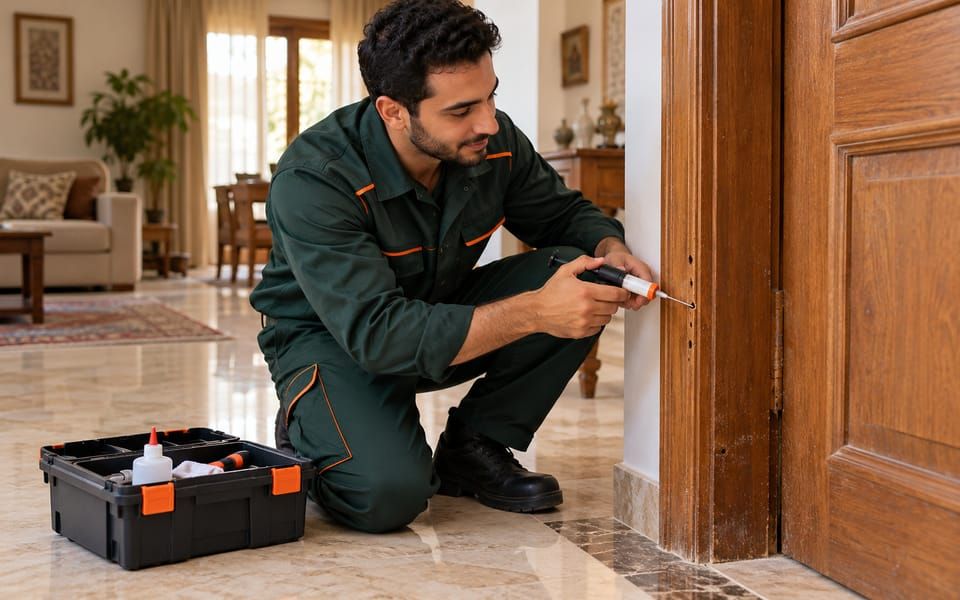
Illustrative photo of a technician without a mask treating woodworm holes in a door

In short

Woodworm treatment starts with an inspection to see whether the beetles are still active or the holes are old. If so, we inject the tunnels through the holes and treat bare, unvarnished wood. If a piece is weak, we advise replacing it and whatever touches it. We also check for damp, since one type lives in moist wood.

  • Woodworm treatment specialists
  • Treatment that reaches inside the wood
  • Furniture, doors and ceilings
  • We find the source before treating
  • Cost explained before the visit
  • Safety instructions first
  • Follow-up when your case needs it
  • Homes, offices and restaurants

Signs

Signs of woodworm in furniture and doors

The clearest sign is fine powder under the holes, but what matters most is whether it's fresh or old. Fresh powder looks like newly cut sawdust, while old powder is yellowed or caked. Take close-up photos of the holes and powder and send them to us, and we'll tell you if it's woodworm, termites or something else.

  1. Fine, flour-like powder

    A small pile of powder under or next to the holes, on the floor under a wardrobe or on a shelf of the china cabinet. Rubbed between your fingers it feels like talcum powder or flour. Another type of wood borer leaves a slightly coarser powder with pellets in it.

  2. Round holes the size of a pinhead

    Clean, round holes about 1 to 3 mm across, depending on the type. These aren't where the woodworm got in. They're exit holes, left by the adult beetle once it finished feeding inside the wood.

  3. New holes after cleaning

    Mark the existing holes with a marker pen and vacuum up the powder. If after a few weeks you find holes without a mark, or a pile of powder has come back, the woodworm is still active inside the piece and needs treatment.

  4. Small beetles near the window

    A slender beetle under 6 mm long, reddish brown to black. It moves mostly at night and is drawn to light, so you find it on the window sill or near a lamp, more often in late winter, spring and summer.

  5. A faint ticking sound

    In the quiet of the night you may hear faint scratching or ticking inside the wood. That's the sound of large larvae feeding, and you hear it more in spring and summer, when the moisture in the wood goes up.

  6. Found one of these signs? Take a photo and send it to us, and we will tell you whether it is woodworm or something else before any visit.

    Send the photo

Woodworm or termites?

Both eat wood from the inside, but the treatments are completely different, and a wrong diagnosis means money and time spent on a treatment in the wrong place. You can tell them apart by what each one leaves behind:

  • Woodworm (wood-boring beetles) leaves small round holes on the surface of the wood, with fine, flour-like powder under them and no mud at all.
  • Subterranean termites, which come up from the soil, build thin mud tubes about the width of a pencil on the wall or the foundation, and the wood they eat is hollowed out along the grain and packed with mud.
  • Drywood termites, which live inside dry wood, leave bigger, gritty pellets that look like crushed pepper, not fine powder.
  • Small shed wings on the window sill or by the door are a sign of termites, not woodworm.

Termite treatment depends on where the colony is, and it often starts with the soil around the building. Woodworm is treated in the infested piece itself. If you’re not sure which one you have, photograph the wall, the wood and the powder and send them to us before you buy anything. Our guide to woodworm vs termites has more on telling them apart, and termites have their own termite treatment page.

How did the woodworm get into your home?

Woodworm doesn’t walk in from the street the way cockroaches do. It arrives already inside the wood: a secondhand chair or china cabinet, an antique from an old market, a wicker basket or a piece of bamboo, or timber stored somewhere infested before the carpenter worked with it. A piece can look sound for years until the beetles finish developing, come out and leave the first holes.

One type, the powderpost beetle, prefers hardwoods such as oak, walnut and mahogany, and it likes bamboo too. That’s the one we find in furniture, parquet and door frames. Another type, the furniture beetle, likes damp and attacks softwoods like pine as well. It shows up in wooden ceilings, storage lofts and wardrobes standing against a wall with a leak, especially in older houses.

Many people ask whether the weevils in rice and flour are the same as woodworm. They aren’t. That’s a different insect that lives on stored food and doesn’t eat wood, and dealing with it starts in the kitchen cupboard, not with the carpentry.

When should a piece be treated, and when should it be replaced?

Not every piece of wood with holes in it has to go. Woodworm eats slowly, so you have time to inspect and decide without panic. Damage limited to one or two pieces, like a parquet board, a door frame or a chair leg, is usually simpler to replace than to treat, provided the pieces touching it are replaced or treated along with it. For a large wardrobe, an original door in an old house or an antique that means something to you, injection makes more sense.

A piece that crumbles when you press it with your finger, or a load-bearing ceiling beam with a lot of holes in it, needs a carpenter to assess its strength before any treatment. The treatment stops the woodworm, but it doesn’t bring back wood that has already been eaten.

When should you call a woodworm control company?

If you marked the holes, cleaned up the powder and found new holes or a fresh pile of powder a few weeks later, or if the woodworm is in a ceiling, parquet or a fixed door that’s hard to take apart, it’s time for a professional inspection. Call us too if you aren’t sure whether it’s woodworm or termites, because the difference changes the whole treatment plan. Call or WhatsApp +201007892200, or see the other options on our contact page. Same-day visits are available in any of Egypt’s 27 governorates.

Why it comes back

Why doesn't painting or spraying the wood get rid of woodworm?

The beetle you see outside is the final stage. The larva lives inside the wood for months or years, and sprays and paint stop at the surface. Many people also end up treating old holes the woodworm left long ago. The fix is to confirm it's active first, then get the treatment to where the larva actually lives.

  1. The larva lives inside the wood

    Woodworm spends most of its life as a larva, boring tunnels inside the piece. From egg to adult beetle can take anywhere from a few months to 5 years, depending on the type and the wood. Spraying the surface only kills what's walking on the outside.

  2. Paint shuts the treatment out

    The beetle lays its eggs only in bare wood, so varnish and paint protect a piece from a new infestation. Put them over wood that already has larvae, though, and they stop the treatment from reaching them while the larva keeps eating underneath.

  3. Damp brings it back

    One type of woodworm needs damp wood to finish developing, and it favors wooden ceilings, storage lofts and wardrobes standing against a wall with a leak. As long as the damp stays, the beetles can lay eggs in the same wood year after year.

Treatment

How we treat woodworm, step by step

The work follows 5 steps. The inspection matters most, because it shows whether there's any active woodworm at all and whether the piece is worth treating or simpler to replace. We explain each step before we start it, and at the end we tell you what to watch over the next few weeks and when to call us again.

  1. Photos and questions before the visit

    We ask what the affected piece is (wardrobe, door, parquet, ceiling), when you first saw the powder, whether the wood is painted or bare, and whether there's a leak or damp nearby. A close-up photo of the holes and powder saves a lot of time on the visit.

  2. Inspecting the wood and checking for activity

    The technician looks at the color of the powder and the shape of the holes, and checks the pieces next to the affected one and any wood touching the wall. They also look for mud tubes or shed wings, because those point to termites, which need a different treatment.

  3. Injecting the holes and treating bare wood

    The product is injected into the holes so it reaches the tunnels, and bare surfaces with no varnish are brushed or given a targeted spray. The product and method depend on the wood and where it is, and nothing is sprayed into the air of the room.

  4. Replacing a weakened piece

    If the damage is limited to one or two pieces, like a door frame or a parquet board, replacing it is sometimes simpler than treating it. In that case we advise replacing it together with the pieces touching it, as a precaution.

  5. Watching the powder and filling the holes

    After treatment, clean off the powder, mark the holes and watch for new ones. Once the activity seems to have stopped, fill the holes and coat bare wood with varnish or paint so the beetle has nowhere to lay eggs. With parquet, wait at least 6 months before you refinish it.

Ready for the first step? Tell us what you saw.

Safety

Does woodworm treatment affect children and pets?

Safety depends on the product and how it's used. For woodworm, the product goes into the holes and the affected wood itself rather than being sprayed around the whole room, but it still needs time to dry. Before the visit we ask about children, pregnancy, allergies and pets, and tell you when you can use the piece again.

  • Children and pregnancy

    Let us know on the first call. Keep children away from treated pieces until they're completely dry, especially a baby's crib and chairs they grab with their hands. When the piece can be used again depends on the product.

  • Kitchen cabinets and food

    If the woodworm is in a kitchen cabinet or a china cabinet, empty it of food and dishes before the visit, and don't put them back until the technician says so. The weevils you find in rice and flour are a completely different insect, and they don't eat wood.

  • Pets, birds and fish tanks

    Take cats, dogs and birdcages out of the room during the treatment, and cover the fish tank and switch off its pump if it's nearby. Bring them back once the room has aired out and the product has dried.

  • Ask about the product

    You have a right to know the product's name and details before we start. If anyone at home has an allergy or asthma, tell us so we can choose a method that suits your household.

Who it is for

Woodworm treatment for homes, hotels and furniture showrooms

Woodworm arrives inside the wood itself, in secondhand furniture, antiques or timber stored for a long time before it was worked. That's why it turns up in new apartments, old houses, hotels and warehouses. What changes from one place to the next is how much wood needs checking and how the follow-up works.

Homes and apartments

At home it usually starts in a single piece, like a wardrobe, a chair or a picture frame, or in the parquet and wooden ceilings of older houses. Send us a photo of the holes and the powder and tell us how old the wood is, and we'll tell you whether it needs treatment or just monitoring.

Send details of your home

Businesses and offices

Hotels and restaurants with wooden furniture and decor, furniture showrooms, carpentry workshops and timber stores need new wood checked before it goes into storage, plus a plan for infested pieces so the woodworm doesn't spread to the bare wood next to them.

Ask for a business quote

Price

What sets the price of woodworm treatment?

No single price fits every case. An apartment with one infested room is not the same as a whole apartment, and a home is not the same as a business. The cost depends on these four factors, and we explain it in detail before you confirm the booking, with no surprise charges after the visit.

  1. Size and type of placeA 90-square-meter apartment is not the same job as a villa with a garden, and a restaurant is not the same as a warehouse.
  2. Type of pestEach pest needs its own product and method. Gel bait for cockroaches, bait stations for rats and mice, and wood injection for woodworm.
  3. How far it has spreadA first sighting a week ago is different from an infestation that has been there for months. That is why we ask for photos and signs.
  4. How many visits the case needsSome cases need a follow-up or an extra visit. We decide that after checking which insects or rodents are involved and how far they have spread.

Ask for the quote to show:

  • Inspection and finding the source
  • The products used and their details
  • Number of visits and the follow-up needed
  • Terms and length of any guarantee, if there is one
  • How we record what was done on the visit

Coverage

Woodworm treatment in every governorate, same day

We cover all 27 governorates of Egypt with same-day visits. Send your area and the problem on WhatsApp or call us, and we will set a visit time for your home or business. The groups below show the main cities and districts in each region we reach.

  • Greater CairoCairo, Giza and Qalyubia, including Nasr City, New Cairo (Fifth Settlement), Rehab City, El Shorouk, Madinaty, Maadi, Heliopolis, Helwan, 6th of October, Sheikh Zayed and Mohandessin
  • Alexandria and the CoastAlexandria, Beheira, Matrouh and the North Coast
  • The DeltaGharbia, Monufia, Dakahlia, Sharqia, Kafr El Sheikh and Damietta
  • Canal Cities and SinaiPort Said, Ismailia, Suez, North Sinai and South Sinai
  • Upper EgyptFaiyum, Beni Suef, Minya, Asyut, Sohag, Qena, Luxor and Aswan
  • Red Sea and New ValleyRed Sea and New Valley
Send your area and book today

Questions

Common questions about woodworm

These are the questions people in Egypt ask most about woodworm, with answers from our daily work. If yours is not here, type it in the box below. It lands in our WhatsApp, and one of the team replies about your exact situation.

Is woodworm harmful to people?

No. Woodworm beetles don't bite and aren't known to harm people. All the damage is to the wood. Vacuum up the powder as it falls. If someone at home has a chest allergy and the dust bothers them, ask a doctor.

Does woodworm die on its own?

Sometimes, yes. Many holes are old, the beetles have left and the infestation ended by itself. But the type that likes damp can come back and lay eggs in the same wood year after year. Mark the holes and watch for powder for a few weeks before you decide to treat.

Is woodworm contagious? Can it spread to other furniture?

It can, if the piece next to it is bare wood with no varnish or paint, because the beetle lays eggs only in bare wood. That's why we check the pieces touching the infested one, and why we advise looking over any secondhand furniture carefully before it comes into your home.

What kills woodworm?

A product that reaches the larva inside its tunnels, or deep cold that gets right to the core of the piece. Small items like a picture frame or a wooden ornament can go in the freezer at -18°C for 3 to 7 days. Large or fixed pieces need injection or replacement.

Do vinegar or kerosene get rid of woodworm?

Not really. Vinegar and garlic sit on the surface while the larva is in tunnels deep in the wood, and even professional products may not go deeper than 6 mm into dry wood. Kerosene and paint thinner catch fire, so injecting them into a wardrobe or door indoors is a fire risk. Send us a photo of the piece before you try anything.

What is the white worm coming out of my wood?

Most likely a woodworm larva. It's white, 6 mm long or less and lives inside the tunnels, and it's the larva, not the beetle, that actually eats the wood. If you find one while taking a piece apart or repairing it, the woodworm is still active in that piece.

What insect eats wood in the house?

The two that do the most damage to dry wood are termites and woodworm. Woodworm leaves round holes and fine powder. Termites leave mud tubes on the wall, wings near the windows and wood hollowed out and packed with mud. The treatments are different, so telling them apart comes first.

Not sure where to start? Tell us the problem and we'll plan the next step with you.

+201007892200
Browsing on a computer?
Scan the code and call us from your phone.